
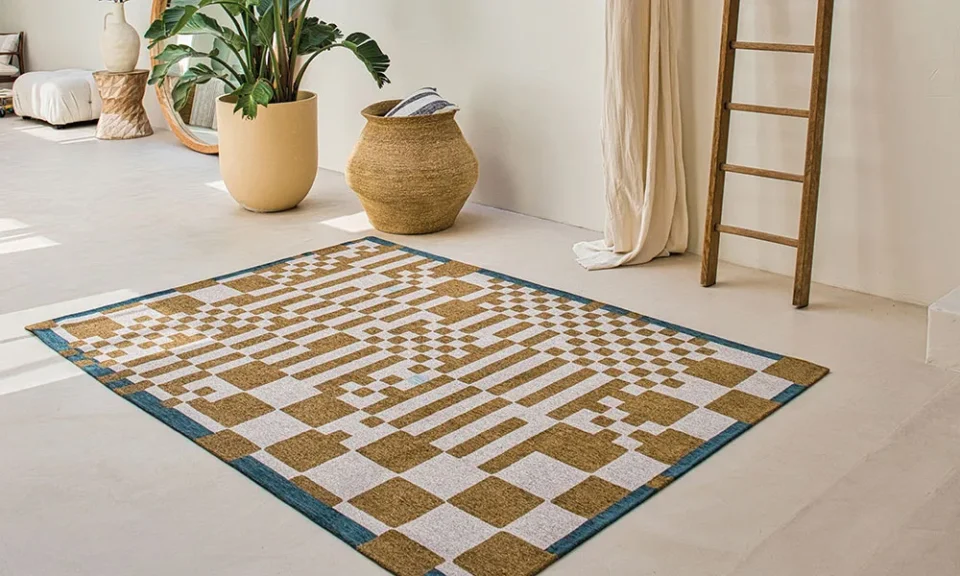
Rug slippage on hardwood surfaces creates safety hazards and maintenance challenges in residential environments. Hardwood floors lack sufficient friction to anchor textile floor coverings without additional intervention. Multiple prevention methods exist to secure rugs permanently against movement during normal household activities. These techniques address the fundamental physics problems that cause displacement while preserving floor finish integrity. Designers often highlight texture balance and functional elegance, integrating Instyle Rugs to create a stable foundation that supports movement while enhancing the room’s overall atmosphere.
Rug pad specifications
Appropriate rug pad selection determines anchoring success on hardwood installations. Dense rubber compound pads provide optimal grip characteristics while distributing weight evenly across floor surfaces. Slip resistance, durability, and floor protection are directly influenced by the composition of a material. The thickness of pads ranges from 1/8 inch for low-profile applications to 1/2 inch for maximum requirements. Density ratings indicate compression resistance and longevity under traffic loads. Natural rubber formulations offer superior adhesion compared to synthetic alternatives.
Surface preparation requirements
Floor condition assessment precedes rug installation to ensure optimal adhesion parameters. Contamination removal eliminates substances that compromise pad-to-floor contact efficiency.
- Cleaning agents remove accumulated wax, polish residues, and embedded particles
- Degreasing solutions eliminate oils and film layers that reduce friction coefficients
- Moisture measurement confirms complete drying before installation procedures
- Surface texture evaluation identifies areas requiring additional preparation steps
- Temperature acclimation allows materials to reach optimal flexibility ranges
- Debris extraction includes microscopic particles that create slippage points
Preparation protocols establish baseline conditions for maximum anchoring effectiveness while preventing damage to expensive hardwood installations. Rug positioning within room layouts affects stability through traffic pattern analysis and furniture interaction zones. High-movement areas require enhanced anchoring compared to low-traffic regions. Weight distribution from furniture legs provides natural anchoring when positioned over rug perimeters. Strategic placement near walls reduces exposure to multidirectional forces that promote displacement during normal household activities.
Load distribution techniques
Additional weight application at critical stress points maintains position stability without relying exclusively on pad friction. This approach proves particularly effective for lightweight textile products lacking sufficient mass for gravitational anchoring.
- Furniture positioning creates anchor points at corners and edges most prone to lifting
- Decorative weights provide targeted pressure at problem areas without aesthetic compromise
- Table legs positioned over rug sections eliminate movement in high-activity zones
- Bookshelf placement along rug borders creates permanent anchoring systems
- Strategic object placement maintains consistent pressure distribution patterns
- Corner securing methods address the most common failure points in rug installations
Weight distribution methods supplement primary anchoring systems while serving functional room arrangement purposes. Regular inspection and cleaning procedures maintain anchoring system effectiveness throughout the installation lifespan. Preventive maintenance addresses degradation factors before they compromise stability. Vacuum cleaning removes accumulated debris from pad interfaces and floor contact surfaces. Quarterly inspections assess pad condition, adhesion levels, and wear patterns that might require intervention or replacement.
Supplementary anchoring systems
Additional securing methods address specific movement patterns in challenging installations where standard techniques prove insufficient. These specialized solutions target particular failure modes. Carpet tape applications provide temporary or permanent edge securing for problem areas. Corner grip devices offer targeted anchoring without full-surface coverage requirements. These supplementary methods integrate with primary pad systems to create comprehensive anchoring solutions. Effective rug anchoring combines material science principles with proper installation techniques and maintenance protocols.
