
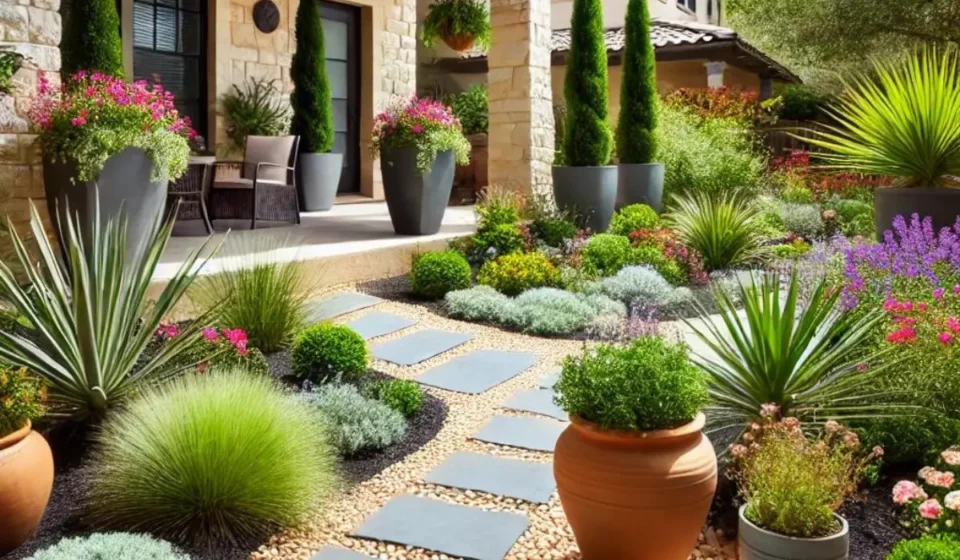
Austin backyards are becoming more than patches of grass behind the house. Homeowners are creating outdoor spaces that feel like an extension of their living areas while also making practical sense for Central Texas weather. Current design trends are moving toward comfortable outdoor living, water-conscious planting, natural materials, shade, and landscapes that are easier to maintain through long periods of heat.
For homeowners considering backyard landscaping Austin projects, the biggest shift is toward designing around how the space will actually be used. Instead of filling every available area with plants or lawn, landscape designers are creating intentional zones for dining, relaxing, entertaining, gardening, and spending time outdoors.
Why are Austin homeowners changing the way they design their backyards?
Central Texas creates some very specific landscaping challenges. Intense summer heat, strong sunlight, periods of dry weather, and sudden heavy rainfall can all affect how a landscape performs. A backyard that looks attractive immediately after installation may become difficult to maintain if its plants, drainage, irrigation, and materials are not suited to local conditions.
That is why climate-conscious design has become a much stronger part of backyard planning. Recent landscape design discussions are emphasizing water management, healthier soil, drought-tolerant planting, rain gardens, permeable surfaces, and other approaches that help landscapes handle water more effectively.
For Austin homeowners, this means the most appealing landscapes are increasingly those that combine appearance with practical performance.
Are outdoor living spaces becoming the centerpiece of Austin backyards?
Yes. One of the clearest trends is turning the backyard into an additional living area rather than treating it simply as a garden.
Homeowners are incorporating patios, covered seating areas, outdoor kitchens, pergolas, dining spaces, and comfortable gathering areas into their landscape plans. The goal is to make the backyard useful for more than one occasion. A well-designed space might provide an area for morning coffee, family meals, weekend entertaining, and quiet evenings outside.
This approach also works particularly well in Austin because shade and shelter can make a significant difference in how comfortable an outdoor area feels. Anderson Landscapes currently highlights outdoor kitchens, patios, pergolas, patio covers, masonry, and custom outdoor living among its residential landscaping services.
Rather than adding features individually, homeowners are increasingly planning the entire backyard as one connected environment.
Are natural and water-conscious landscapes replacing traditional lawns?
In many projects, yes. Large expanses of high-maintenance lawn are being balanced with planting beds, stonework, native or adaptive plants, and other lower-water landscape elements.
This does not mean every Austin homeowner is removing their lawn. Instead, the trend is toward using lawn where it provides a real purpose and replacing unnecessary areas with planting or hardscape. Xeriscaping is also becoming more sophisticated. Modern water-conscious landscapes can use layered textures, native plants, ornamental grasses, stone, pathways, and carefully selected trees rather than looking bare or overly rocky.
Current landscape guidance is also placing greater emphasis on water retention and smarter drainage, including rain gardens, permeable surfaces, mulch, and soil improvements.
For homeowners, the benefit is a backyard that can remain visually interesting without depending on constant irrigation.
What types of plants are becoming more popular in Austin backyards?
Plant selection is becoming more focused on resilience. Instead of choosing plants simply because they look attractive at a garden center, homeowners are increasingly considering whether a plant can handle Austin’s heat, sunlight, soil conditions, and watering requirements.
Native and well-adapted plants can provide seasonal color, texture, habitat for pollinators, and structure without demanding the same level of attention as plants poorly suited to the region. Trees are particularly valuable because they can contribute shade while helping define different areas of a backyard.
The design trend is also moving toward layered planting. Rather than having one type of plant repeated across a large bed, designers can combine trees, shrubs, grasses, flowering perennials, and ground-level plants to create a more natural appearance.
Are homeowners using more hardscaping in backyard designs?
Hardscaping continues to play an important role, particularly when it is integrated with greenery rather than used to cover most of the yard.
Natural stone patios, retaining walls, walkways, built-in seating, raised planting areas, and textured surfaces can give a backyard structure and make it easier to move between different zones. Anderson Landscapes notes that Central Texas projects commonly incorporate materials such as limestone, Lueders, travertine, flagstone, and textured concrete.
The current preference is less about adding as much hardscape as possible and more about making every surface serve a purpose. A pathway should improve circulation, a retaining wall can manage grade changes, and a patio can establish a comfortable outdoor room.
What are homeowners doing to make their backyards more comfortable during hot weather?
Shade is becoming a major design consideration rather than an afterthought. Pergolas, patio covers, strategically positioned trees, and shaded seating areas can make outdoor spaces considerably more usable.
Material selection matters as well. Landscape designers are paying closer attention to how surfaces respond to intense sun and heat, while layouts can be planned to encourage airflow instead of creating enclosed areas that trap heat.
This climate-first approach is particularly relevant in Austin, where outdoor spaces need to perform through demanding summer conditions.
How should you choose from the best landscaping companies for an Austin project?
The right landscaping company should understand more than planting and installation. Homeowners should look at how a company approaches site planning, drainage, plant selection, hardscaping, outdoor structures, irrigation, and long-term maintenance.
It is also worth reviewing completed projects rather than choosing a contractor based solely on a portfolio of attractive individual features. A backyard needs to function as a complete space, and good design should account for the home’s architecture, sun exposure, existing trees, grading, drainage, and the homeowner’s lifestyle.
Companies with local experience can also recognize challenges that may not be obvious during the initial consultation. Anderson Landscapes describes its work as a design-build approach focused on Central Texas conditions, with experience across Austin and surrounding communities.
For homeowners comparing the best landscaping companies, the most useful questions are often about the design process, construction experience, material quality, communication, and how the finished landscape will be maintained over time.
What should Austin homeowners consider before starting a backyard project?
A successful backyard project starts before construction begins. Think about how you want to use the space, where the afternoon sun falls, which areas need shade, how water moves through the property, and how much maintenance you realistically want.
It is also worth planning the project as a whole instead of installing unrelated features one at a time. A patio added today may affect drainage, planting beds, pathways, lighting, and future outdoor structures. A coordinated plan can prevent those elements from competing with one another.
The most current direction in Austin landscaping is ultimately practical: create outdoor spaces that look beautiful but are also comfortable, durable, water-conscious, and appropriate for Central Texas conditions. That combination allows a backyard to remain useful long after the installation is complete.
Frequently Asked Questions
What is trending in Austin backyard landscaping?
Outdoor living areas, water-conscious planting, native and adaptive plants, natural stone, integrated shade, multifunctional patios, and lower-maintenance landscape designs are among the major trends shaping Austin backyards.
Is xeriscaping a good option for an Austin backyard?
Xeriscaping can be a practical option when it is properly designed around local conditions. It can combine drought-tolerant plants, efficient irrigation, mulch, stone, and thoughtful planting layouts to reduce unnecessary water use while maintaining visual appeal.
How can I make my Austin backyard more comfortable in summer?
Start with shade and airflow. Trees, pergolas, patio covers, and carefully positioned outdoor seating can create more comfortable areas. Choosing suitable materials and heat-tolerant plants can also improve the overall performance of the landscape.
Should I remove my entire lawn?
Not necessarily. Lawn can still be useful for children, pets, recreation, or other activities. A better approach may be reducing unnecessary lawn and replacing selected areas with planting beds, pathways, trees, or other functional landscape features.
When should I hire a professional landscape company?
It is useful to involve a professional before construction begins, especially for larger projects involving grading, drainage, retaining walls, patios, outdoor kitchens, irrigation, or multiple landscape features. Early planning can help ensure that the finished backyard works as one cohesive space.
For homeowners planning a backyard transformation in Central Texas, working with a local design-build landscape professional can help turn individual ideas into a landscape that is comfortable, functional, and suited to Austin’s conditions.
