
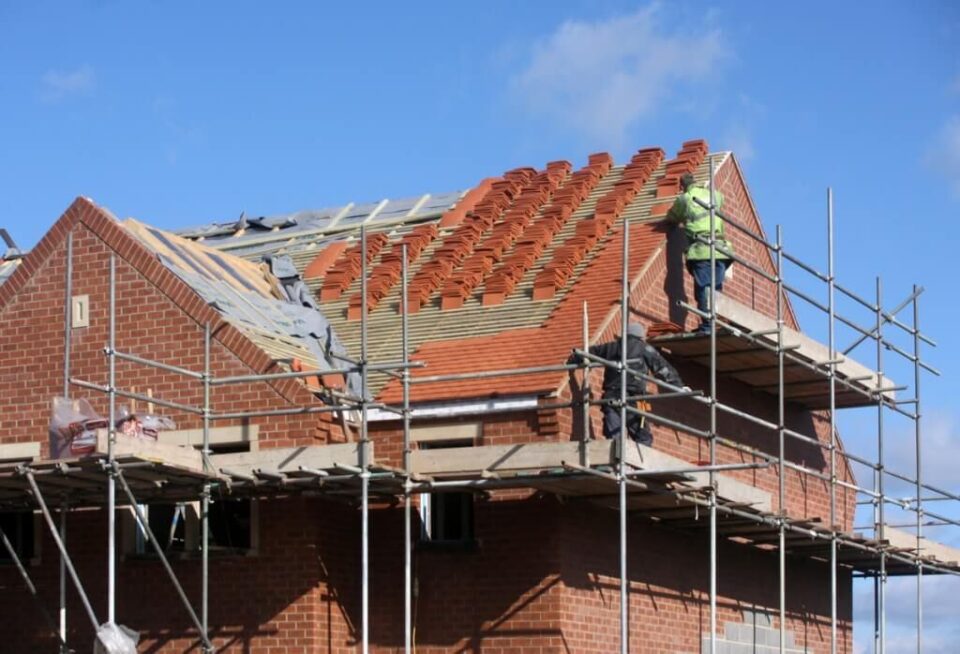
You’re adding a flat roof extension to your house. It’s efficient. It’s modern. It maximizes interior space. Your architect’s drawn it beautifully. It ties into your existing pitched roof seamlessly on the drawings.
Then the roofer arrives and starts muttering about “flashings” and “valleys” and “water management at the junction.” You nod along. You assume they’ve got this sorted.
Five years later, you’ve got a water stain on the ceiling. The leak appears when it rains heavily. It’s coming from exactly where the extension meets the main pitched roof.
This is one of the most common failures in British residential architecture. Not because the materials are poor. Not because the roofers are incompetent. Because the junction between flat and pitched roofs creates conditions that actively push water into your house.
And almost nobody explains this risk upfront. This is why you need a skilled roofer like Point Roofing – https://www.norwich-roofing.co.uk who knows what they are doing.
Why This Junction Is So Problematic
A pitched roof naturally sheds water. Rain falls on the slope, gravity does the work, water runs down into guttering. Simple physics.
A flat roof holds water slightly longer. There’s a fall (usually 1 in 40, which is barely noticeable), but water still pools. The membrane has to deal with water sitting on it for hours after rain.
Now merge these two systems. Water running off the pitched roof hits the flat extension. It collects at the junction where they meet. It’s looking for a way to escape. If the flashing—the metal strip that bridges the gap, isn’t perfect, water finds the tiniest gap and forces its way in.
The problem is compounded by thermal movement. The pitched roof and flat extension expand and contract at different rates as temperature changes. Metal flashing expands and contracts too. Over years, tiny gaps open. Mortar cracks. Sealant fails.
A junction that was watertight in year one becomes vulnerable in year three.
The Flashing Vulnerability
This is where the risk actually lives.
Where a flat extension meets a pitched roof, you need metal flashing. Usually lead or zinc. It’s usually installed like this:
- The lower edge sits on top of the flat roof membrane
- The upper edge sits under the tiles or slates of the pitched roof
- It’s mortared or sealed into place
- Pointing (mortar between tiles) holds it in position
This seems straightforward. It’s not.
The junction between the lower edge of the flashing and the flat roof membrane is a weak point. Water running off the pitched roof hits this junction. If the flashing isn’t sealed perfectly to the membrane, water gets underneath. Once it’s under the flashing, it’s behind your first line of defense.
An inspector in Norwich found active leaking at the junction of a flat extension and pitched roof. The property was eight years old. Investigation revealed that the flashing had separated from the flat roof membrane by roughly 3mm, barely visible to the naked eye. Water had been running into the gap for years, soaking the insulation and structure underneath.
The fix wasn’t replacing a tile. It was stripping the junction, resealing everything properly, drying out the damp insulation, and reinstalling. Cost: £3,500. Damage to the building: significant.
The Pointing Problem
Mortar pointing (the stuff between roof tiles) is supposed to hold the flashing in place and seal it. But pointing deteriorates. It cracks. It fails. In the UK’s freeze-thaw cycles, mortar life is roughly 20 to 30 years before repointing becomes essential.
Your extension’s been there fifteen years. The pointing looks fine to you. But it’s developed hairline cracks. Water finds those cracks. It runs down behind the pointing, finds the flashing, and works its way in.
A good roofer like Roofers Norwich – https://roofers-norwich.co.uk will warn you: “That pointing around the flashing is showing age. We should plan for repointing within the next few years.” Most don’t mention it. The pointing’s not their immediate problem. Until it causes a leak and the customer blames them for not warning them.
The cycle looks like this:
- Year 0-5: Pointing is intact, flashing works
- Year 5-15: Hairline cracks develop invisibly
- Year 15-20: Water starts finding the cracks
- Year 18-25: First water stains appear inside
- Year 25+: Significant water damage develops
This timeline varies depending on climate exposure, quality of original work, and roof pitch angle. South-facing extensions get hit harder by sun and temperature variation. Exposed sites get hit harder by wind and rain driving into the junction. North-facing extensions sometimes stay dry for longer because they’re in permanent shade.
Membrane Failure at the Junction
The flat roof membrane itself is vulnerable where it meets the pitched roof.
The flashing sits on top of the membrane. The membrane edges are typically sealed with adhesive or thermal welding. But that seal is under constant stress. Water pools against it. Temperature cycles work it. The seal gradually fails.
An extension in Cheshire had bituminous felt membrane. The flashing was properly installed. But after twelve years, the felt had cracked right at the junction with the flashing. The crack was probably caused by thermal movement, the membrane and flashing expanding and contracting at different rates until something had to give.
Water seeped through that crack into the insulation. The owner didn’t notice until insulation effectiveness dropped noticeably in that area and they got curious about the ceiling discoloration.
Different membrane types have different failure patterns:
- Bituminous felt: cracks and splits after 12-20 years at junctions
- EPDM rubber: becomes brittle at junctions if UV-exposed; typically fails 15-25 years
- TPE (thermoplastic polyethylene): relatively better at junctions if installed competently; 20-30 years typical
- Liquid-applied coatings: variable, depends heavily on application quality; 10-20 years
The common thread? All of them struggle at junctions under decades of thermal cycling and water exposure.
The Drainage Problem
Some extensions are installed with inadequate thought to water drainage at the junction.
If your flat roof doesn’t have enough fall (slope), water pools right at the junction. It sits there. It penetrates the flashing. It finds its way under the membrane.
A properly designed flat roof should have fall directing water away from the pitched roof junction. Instead, water should drain toward the opposite edge of the flat roof, into guttering that carries it safely away.
But on many extensions, the drainage design is poor. Water collects at the junction because the roof’s fall is wrong. This creates an active leak risk that’s present every time it rains, not just during exceptional weather.
Check your extension roof from the side. Does water visibly collect at the junction? That’s a drainage problem waiting to fail.
When It All Goes Wrong: Case Studies
Property in Surrey, installed 2008: Flat roof extension with lead flashing. Beautiful junction on paper. The pointing deteriorated normally. By year 15, water was finding the cracks. The owner noticed water stains in year 17. Investigation found the insulation was so wet it had lost all effectiveness. Cost to repair: £4,200.
Property in Bristol, installed 2012: Flat EPDM rubber roof. Flashing properly installed initially. But EPDM degrades faster than expected under UV exposure at that particular junction angle. By year 9, the membrane had become brittle. A slight roof movement cracked it. Small leak at first. By year 11, significant water damage. Repair cost: £5,800, plus remedial damp treatment.
Property in Yorkshire, installed 2015: Liquid-applied membrane. Very thin application (contractor cut costs). Thermal movement was greater than the membrane could accommodate. By year 4, stress cracks appeared. The owner caught them early and resealed. But it shows how sensitive junctions are to application quality and material thickness.
These aren’t rare failures. Surveyors see this pattern constantly on extensions over ten years old.
What Makes Some Junctions More Vulnerable
Not all flat-to-pitched roof junctions fail equally. Vulnerability depends on:
Roof orientation: South-facing junctions get intense UV and temperature cycling. More thermal stress. Higher failure risk. North-facing junctions stay damp longer but don’t experience as much thermal shock. Different risks, different timescales.
Rainfall exposure: Exposed properties where rain drives hard against the junction fail faster. Sheltered properties fail more slowly. A property in Cumbria with heavy rainfall and exposure might fail in 12 years. The same design in sheltered Surrey might last 20.
Roof pitch angle: A shallow pitched roof (15 degrees) allows water to pool at the junction longer. A steep pitch (45 degrees) sheds water faster. Shallow-pitch junctions are riskier.
Flashing material: Lead lasts longest at junctions (50+ years typically). Zinc is reasonable (25-35 years). Aluminum can fail faster if not maintained. Copper performs well but is expensive. The material choice affects longevity significantly.
Original installation quality: Poor sealing during installation accelerates failure. Insufficient flashing overlap means water finds edges faster. Inadequate pointing at installation means it fails sooner. A roofer who cuts corners in year one creates a leak in year five.
What You Should Do Now
If you have a flat roof extension meeting a pitched roof, here’s a practical approach:
Inspect the junction regularly: Get up there (safely) twice yearly. Look for:
- Visible gaps or separation between flashing and membrane
- Cracks or deterioration in pointing
- Algae or moss growth (indicates moisture retention)
- Any visible water pooling at the junction after rain
Plan for repointing: Budget for repointing around the flashing every 15 to 20 years. This is preventative maintenance that costs £400 to £800 but prevents leaks costing thousands.
Monitor for water stains: Pay attention to ceiling areas below the junction. Even hairline water stains are warnings. Don’t ignore them. Get a roofer to investigate quickly.
Reseal the junction every 10 years: The seal between flashing and membrane doesn’t last forever. Resealing every 10 years (before failure) costs £150 to £300. Fixing a leak that’s already started costs thousands.
Consider membrane replacement timing: If your flat roof membrane is approaching end-of-life, plan to replace the entire extension roof system. Replace membrane, flashing, and repoint all at once. This is more expensive upfront but prevents the staggered failures that happen when you just patch one element.
Why Roofers Don’t Warn You About This
Here’s the honest bit: many roofers don’t mention junction vulnerability because they expect the extension owner to deal with it later.
They install the junction to current standards. It meets Building Regulations. It passes inspection. But they know, from experience, that in 10 to 15 years, someone will need to reseal it. They don’t mention this because it’s not their problem at handover.
A responsible roofer will say: “This junction will need resealing in about ten years. Budget for that then.” Most don’t. The architect doesn’t mention it either. The surveyor doesn’t highlight it.
So the owner discovers it in year 15 when water starts appearing, assumes something’s gone wrong, and blames the original installation.
The Design Solution
The best way to reduce risk is better design upfront.
Some architects specify a slightly different approach:
- A taller flashing that extends further up under the pitched roof tiles
- Additional breather membrane under the flashing to manage any water that does get past the first line
- Better drainage fall on the flat roof, specifically designed to move water away from the junction
- More robust membrane specification at the junction (thicker, higher-grade material)
- Easier access for future maintenance and resealing
This costs slightly more initially (maybe £200 to £400 extra). But it reduces leak risk significantly and extends the time before resealing is needed.
If you’re designing a new extension, push for this approach. If you already have an extension with a problematic junction, accept that maintenance is coming and budget for it.
The Uncomfortable Truth
Flat roof extensions meeting pitched roofs are a design compromise. They gain you interior space and modern aesthetics. They cost you ongoing maintenance complexity.
Every pitched roof extension avoids this junction problem entirely. No flat-to-pitched junction means no junction leak risk. But pitched roofs cost more, take longer to install, and look less contemporary.
You’re choosing between lower initial cost (flat) and lower maintenance risk (pitched). Understanding that trade-off matters. Pretending flat extensions don’t have this vulnerability doesn’t change the fact that they do.
Your extension’s junction isn’t failing because roofers are incompetent. It’s failing because you’ve created a thermally and hydrologically complex interface that’s under constant stress. It was always going to need maintenance.
The question isn’t whether to avoid the risk, with a flat extension, you can’t. It’s whether you understand the risk, budget for the maintenance, and catch problems early before they become expensive water damage.
