
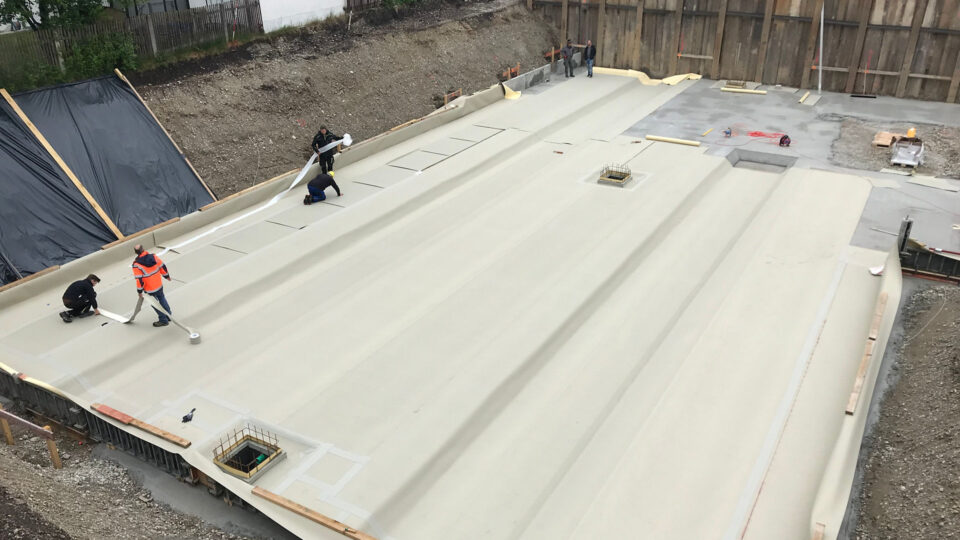
In modern high-rise construction, waterproofing is not just a protective layer—it is a critical performance system governed by strict international standards. Engineers and specifiers must ensure that materials and systems meet benchmarks such as BS 8102, ISO 16938, and ASTM D412 to guarantee durability, safety, and structural integrity.
These standards define performance metrics including hydrostatic pressure resistance, tensile strength, elongation at break, and long-term durability under environmental stress. Failure to meet these criteria can lead to water ingress, structural degradation, and costly remediation.
Key Compliance Requirements in Practice
Hydrostatic Resistance
High-rise basements and podium decks are exposed to continuous water pressure. Waterproofing systems must resist water penetration under sustained hydrostatic load. BS 8102 emphasizes structural waterproofing design and categorizes protection types based on risk exposure.
Elongation at Break
ASTM D412 evaluates the elasticity of membranes. Materials must accommodate structural movement without cracking. High elongation ensures flexibility in areas subject to thermal expansion and contraction.
Thermal Cycle Testing
ISO 16938 outlines durability under temperature fluctuations. Membranes must withstand repeated heating and cooling cycles without loss of adhesion or performance.
Reference Standards for Waterproofing Compliance
| Standard | Focus Area | Key Requirement |
|---|---|---|
| BS 8102 | Structural waterproofing | Resistance to groundwater pressure |
| ISO 16938 | Durability testing | Thermal and environmental resistance |
| ASTM D412 | Material elasticity | Tensile strength & elongation properties |
Specifying the Right Waterproofing Systems
Selecting compliant solutions requires understanding both performance criteria and application zones. Modern international waterproofing systems are engineered to meet these global standards while addressing site-specific challenges in high-rise developments.
For example, podium slabs, wet areas, and roof decks each demand tailored waterproofing strategies. Compatibility with substrates, ease of application, and long-term maintenance must also be considered.
Advanced Solutions for High-Rise Applications
Chemind’s waterproofing range is designed to align with international compliance benchmarks, offering reliable performance across demanding environments.
MM6130K for Critical Structural Zones
The high-performance waterproofing membrane MM6130K is engineered for high elongation and superior adhesion. It performs exceptionally well in areas subjected to movement and hydrostatic pressure, such as basements and retaining walls.
Chemflex R100 for Flexible Protection
Chemflex R100 provides excellent crack-bridging capability and durability under thermal cycling. It is particularly suited for exposed decks and wet areas where flexibility and long-term resilience are essential.
These systems are formulated to meet stringent testing requirements, ensuring compliance with ASTM and ISO standards while delivering practical application benefits for contractors.
Ensuring Compliance in Real Projects
Compliance is not achieved by material selection alone. It involves:
- Proper surface preparation
- Correct application thickness
- Seam detailing and joint treatment
- Quality assurance testing on-site
Engineers must also coordinate with architects and contractors to ensure that specifications are executed precisely. Documentation and inspection play a key role in verifying adherence to standards.
Conclusion
Waterproofing in high-rise construction is a highly technical discipline governed by international standards that define performance, durability, and safety. Understanding requirements such as hydrostatic resistance, elongation, and thermal stability is essential for achieving compliance.
By selecting advanced systems like MM6130K and Chemflex R100, and aligning with globally recognized benchmarks, project teams can ensure long-lasting protection and structural integrity. Ultimately, well-specified waterproofing systems are not just a design element—they are a critical investment in the building’s lifecycle performance.
